
From research to classroom
Research should play a more useful role in everyday school practice and contribute to improved teaching in Swedish preschools and schools. With this aim in mind, the School of Education and Communication (HLK) at Jönköping University has been given a national assignment by the Swedish Institute for Educational Research.
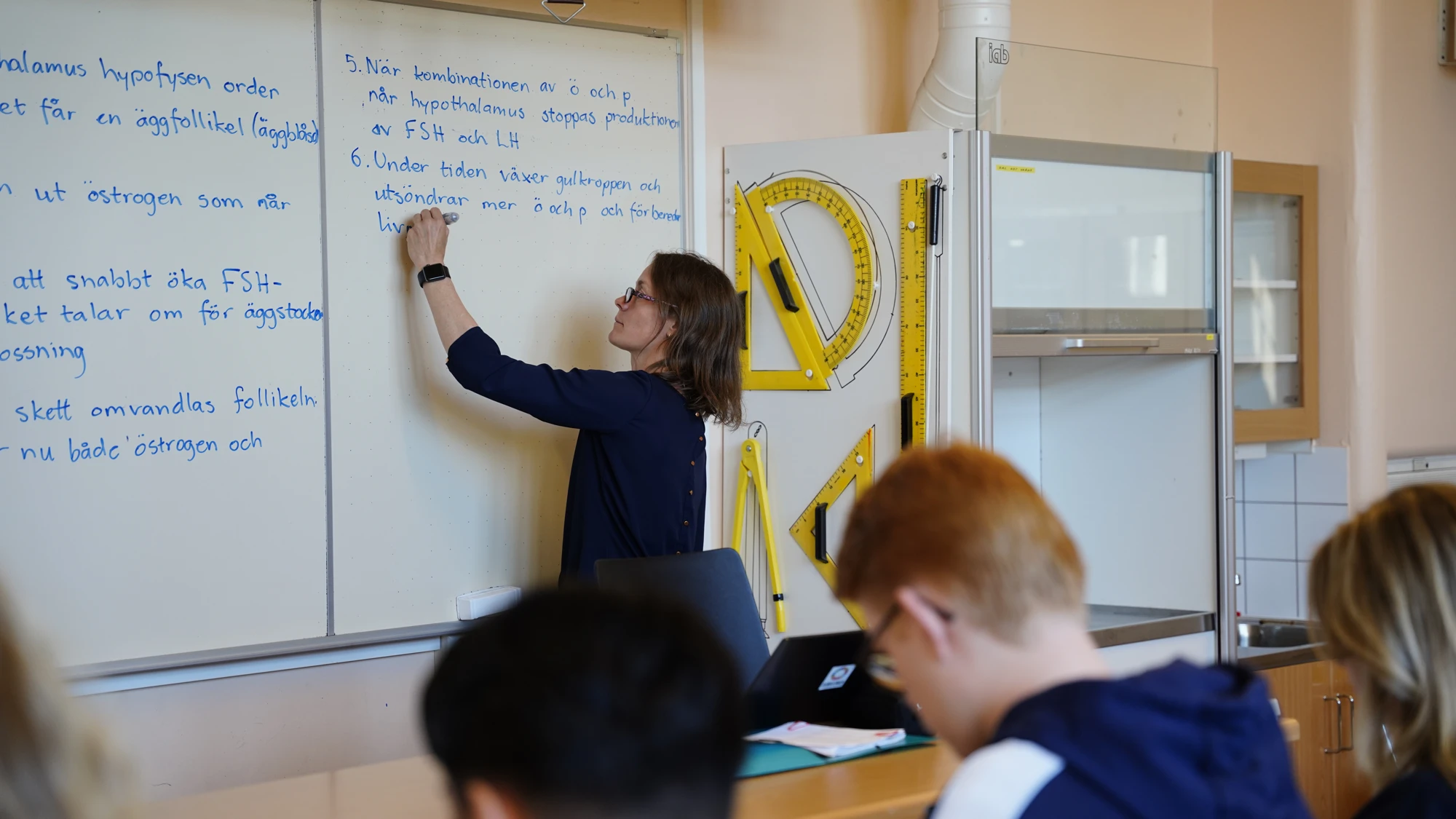
The project Systematic Reviews in Practice aims to make research findings understandable and directly applicable in teaching. It is divided into five sub‑areas:
- Science learning in preschool
- Historical understanding
- The technological development process in the subject of technology
- Teaching for students with intellectual disabilities
- Learning democracy – focusing on teachers’ working methods
Each project is based on a systematic review and is carried out in close collaboration between researchers and practising teachers.
Teaching models developed in the classroom
In focus groups, researchers and teachers plan lessons together, test ideas in the classroom, and analyse the results. In this way, research is brought directly into practice - leading to the development of concrete teaching models and examples. As research becomes part of daily teaching, new instructional approaches emerge.
“This is not about producing more research, but about investigating what happens when teachers actually work with systematic reviews in their own practice. Together with researchers, they test ideas in the classroom and analyse what these mean for teaching—this is where we believe something truly valuable can develop,” says Jesper Boesen, Project Manager and Associate Professor of Mathematics at HLK.
Giving teachers concrete tools
The project follows a clear workflow in which every step is documented: focus groups meet, teaching activities are planned and carried out, and the results are collected for analysis. Experiences and examples from the classrooms are used to create models that other teachers can use.
Researchers from the Swedish Institute for Educational Research participate as expert advisors, providing continuous feedback so that teachers receive support throughout the entire process.
The hope is that the initiative will reduce the gap between research and teaching—and give teachers practical tools that strengthen students’ learning every day.
“In Sweden, we have many high‑quality research syntheses, but we still know too little about how they are used in everyday school practice. The ambition here is both to develop methods for how schools can work with this type of material, and at the same time give the Institute a better picture of how their reviews are actually received and applied,” says Jesper Boesen.
Facts
A systematic review summarises all relevant research within a field in a thorough and structured way. The purpose is to provide a clear picture of what works and to create a research‑based foundation for teaching and decision‑making.


